Green Space & Home Values

Linda Lombardini
After 30 + years of good, hard work in the profession and being in the top 10 percent of agents during many of those years, Linda earned the prestigio...
After 30 + years of good, hard work in the profession and being in the top 10 percent of agents during many of those years, Linda earned the prestigio...
Does Green Space Really Boost Home Values?
Here's What the Research Says
If you've ever felt that a tree-lined street or a nearby park makes a neighborhood feel more valuable, you're not wrong — and now there's a growing body of research to prove it.
At Trillium Real Estate, we've always believed that the natural environment plays a role in what makes a home — and a community — worth investing in. So we dug into the latest studies to find out exactly how much "green infrastructure" affects property values. The short answer? Quite a bit.
What Is Green Infrastructure?
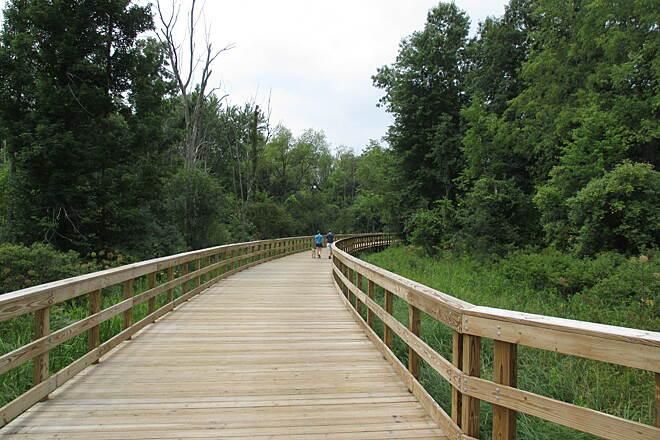
Green infrastructure is a broad term for natural and nature-based features that serve a community function: parks, tree canopy, rain gardens, bioswales, green roofs, and even urban forests. Unlike traditional "gray" infrastructure (think concrete storm drains and retention basins), green infrastructure manages stormwater, reduces heat, cleans the air — and, as it turns out, adds real dollars to nearby home values.
What the Research Shows
We reviewed six recent studies spanning the United States, Europe, and Asia, and the message is remarkably consistent: green infrastructure creates a measurable price premium for nearby homes.
A 2024 study from the Netherlands found that spreading green spaces throughout a neighborhood — rather than concentrating them in one large park — produced the highest total housing value, with increases of up to 20% depending on the type of green space.
Researchers in Beijing found that municipal parks boost home values within a 2,000-meter radius, with mid-sized parks (20–50 hectares) having the greatest impact: a 6–9% premium.
Here in the U.S., a comprehensive meta-analysis by the USDA Forest Service reviewed 21 studies and found that tree canopy cover increases home values at all density levels — and the effect is four times stronger in neighborhoods with more than 25% canopy cover.
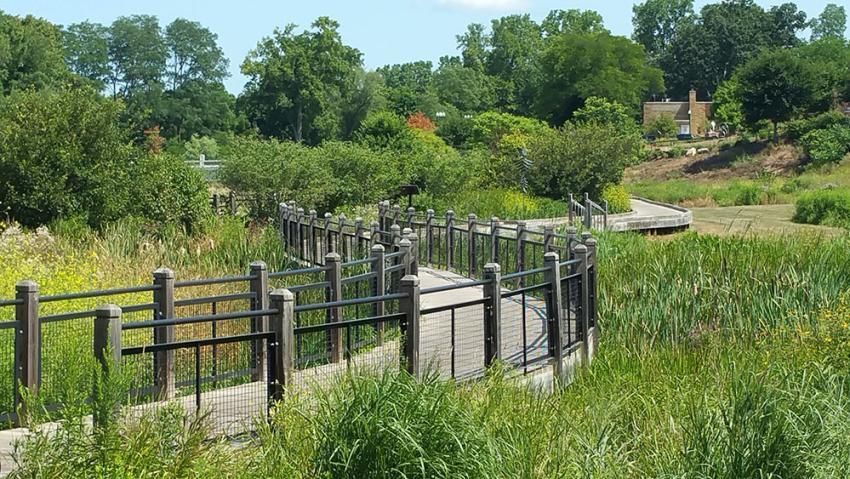
Perhaps most interesting for homeowners and municipalities: a landmark report from the Center for Neighborhood Technology found that each additional rain garden, bioswale, or pervious pavement installation within 250 feet of a home added 1.5–1.9% to its sale price. For a $350,000 home, that's an extra $5,000–$6,600.
A 2025 industry report confirmed the trend, finding that homes near well-maintained rain gardens, bioswales, and urban forests sell 3–7% above market value.
What This Means for You
Whether you're selling or buying in Ann Arbor and the surrounding communities, this research has practical implications:
Sellers: If your home is near a park, mature trees, or a green stormwater feature, that's a real selling point backed by data. It's worth highlighting in your listing and marketing materials.
Buyers: Proximity to green infrastructure isn't just an aesthetic preference — it's an investment. Homes near well-maintained green features tend to appreciate faster and hold their value.
Community members: Supporting local green infrastructure projects — whether it's a neighborhood rain garden, street tree planting, or park improvement — isn't just good for the environment. It's good for your home's bottom line.
The Bottom Line
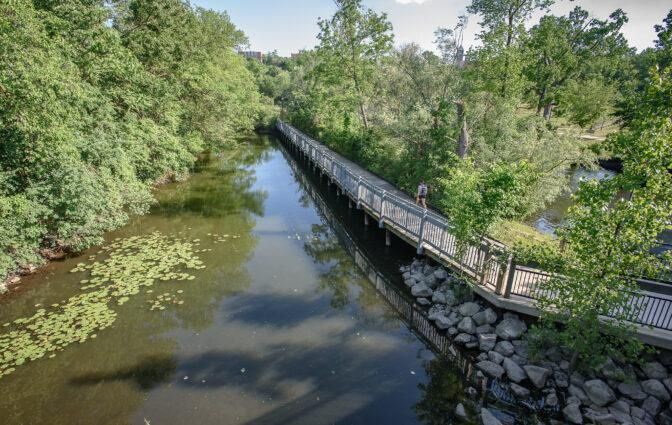
Across dozens of studies and multiple countries, the verdict is clear: green infrastructure adds measurable value to homes, typically in the 2–7% range. In a market like Ann Arbor — where buyers already prize walkability, sustainability, and access to nature — that green premium is likely even stronger.
Curious about how your home's proximity to green spaces affects its value? We'd love to help you find out. Reach out to Trillium Real Estate anytime — we're always happy to talk real estate and the features that make our community a great place to call home.
Photos by Michael Barera via Wikimedia Commons (CC BY-SA 4.0)